
REPAIR DECISION COMPARISON
New vs Remanufactured Parts
Compare process, supplier, coverage and availability rather than assuming one label is always superior.
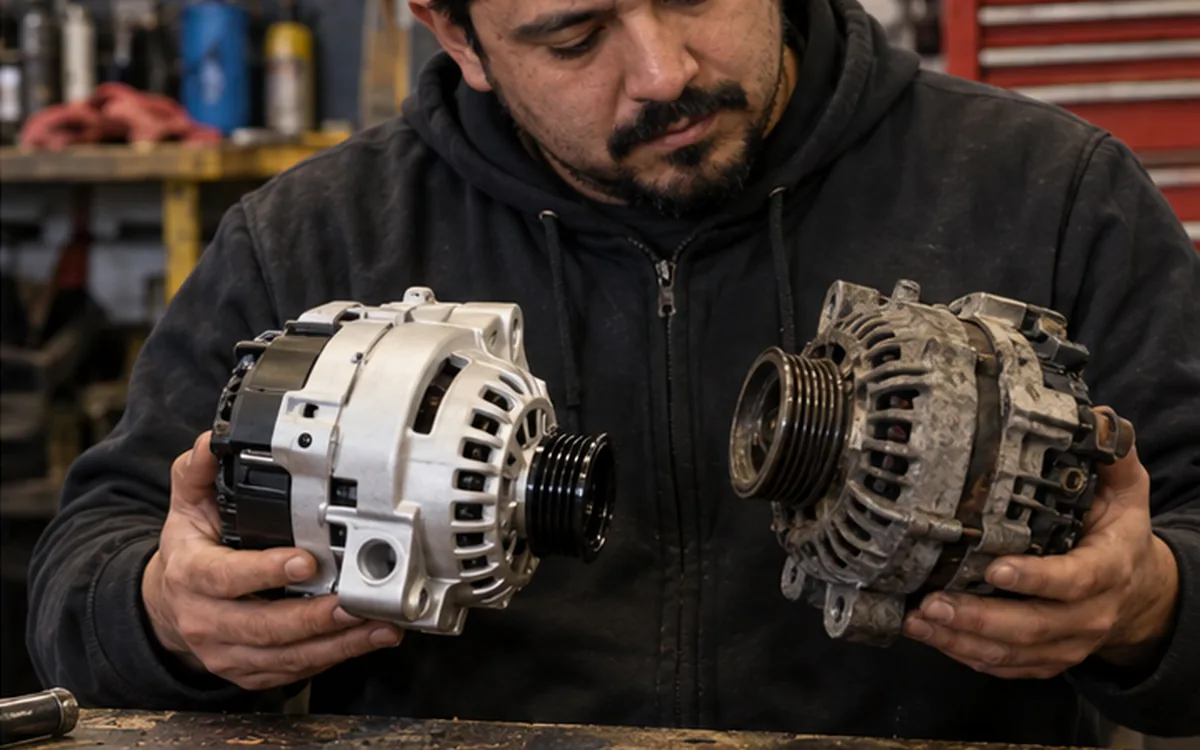
What the labels actually tell you
New parts have not been previously used, while remanufactured units are restored through a defined process. Rebuilt and reconditioned wording can vary; used or salvage parts are not the same as remanufactured.
How to make the comparison fair
Identify the supplier, core charge, included components, testing process, updates, warranty length, labor coverage, failure procedure and availability. FTC consumer guidance recommends understanding the part category in a repair estimate.
Worked situation
A remanufactured alternator has a strong nationwide warranty but excludes labor; a new unit costs more and includes labor coverage through the installer. The better value depends on the terms and vehicle plan.
Questions that expose the real difference
- What observation, measurement or test supports the recommendation?
- Which exact parts, quantities, labor operations and outside services are included?
- What remains unknown and what would trigger additional authorization?
- What warranty applies to the part, labor and consequential work?
- How will the original concern be verified before delivery?
Editorial judgment
A defensible choice is the option whose scope fits the vehicle and task and whose evidence, limitations and total terms are clear. The cheaper label can become expensive when diagnosis, required hardware or programming is excluded; the higher price is not automatically better when it adds work without evidence.
Consumer source
The FTC Auto Repair Basics guide explains written estimates, diagnostic charges, part categories, second opinions and repair records. Reviewed October 28, 2026.