
REPAIR DECISION COMPARISON
OEM vs Aftermarket Parts
Part origin alone does not establish quality, fit, warranty or total value.
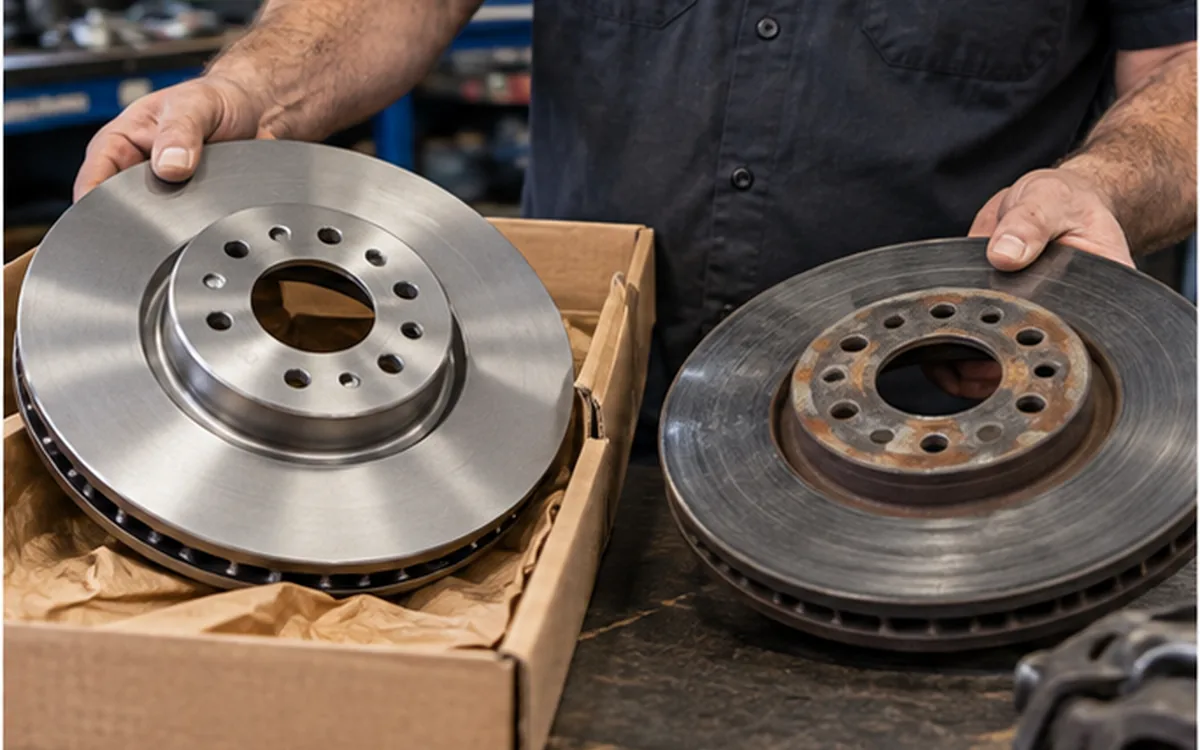
What the labels actually tell you
OEM usually identifies a vehicle-maker-branded channel. Aftermarket covers many manufacturers and quality levels. Remanufactured, rebuilt and used parts are separate categories that need their own terms.
How to make the comparison fair
Compare exact brand and part number, design revision, included hardware, warranty for part and labor, availability, return conditions and whether calibration or programming is affected.
Worked situation
Two brake quotes both say “premium parts,” but only one identifies the manufacturer, hardware, rotor specification and labor warranty. The label is less useful than the documented scope.
Questions that expose the real difference
- What observation, measurement or test supports the recommendation?
- Which exact parts, quantities, labor operations and outside services are included?
- What remains unknown and what would trigger additional authorization?
- What warranty applies to the part, labor and consequential work?
- How will the original concern be verified before delivery?
Editorial judgment
A defensible choice is the option whose scope fits the vehicle and task and whose evidence, limitations and total terms are clear. The cheaper label can become expensive when diagnosis, required hardware or programming is excluded; the higher price is not automatically better when it adds work without evidence.
Consumer source
The FTC Auto Repair Basics guide explains written estimates, diagnostic charges, part categories, second opinions and repair records. Reviewed October 28, 2026.