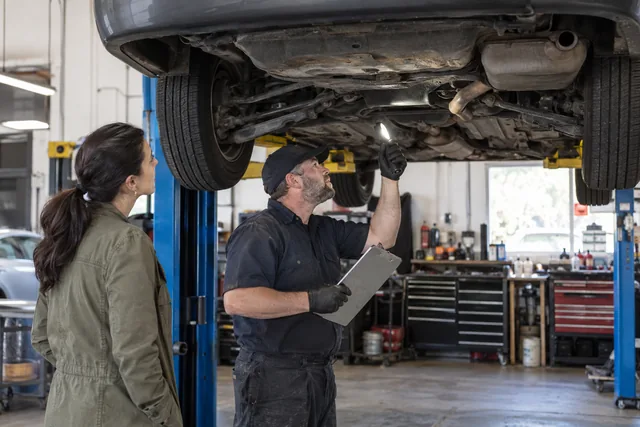

When to act
Exhaust odor in the cabin, fumes accompanied by headache or dizziness, a hanging component, contact with fuel lines or a sudden loud leak should be treated as a safety concern. Move to fresh air and avoid continued operation when fumes may enter the passenger area. Noise alone does not identify the leak location.
What a useful inspection should establish
Inspection should trace the system from engine to tailpipe, including joints, flex sections, shields, hangers, converters, sensors and corrosion. Emissions codes require testing of the monitored system; replacing a converter from a code description alone can miss an engine or sensor condition that damaged it.
How to compare shops
Ask whether the quote repairs a section or replaces an assembly, what material and warranty apply, whether sensors or fasteners are included, and whether emissions compliance or programming affects the job. Confirm that the final check includes leaks, clearance, noise and the original fault.
Prepare one clear symptom record
Write down when the concern started, whether it is constant or intermittent, the conditions that change it, warning lights, recent work and exact vehicle details.
Build a repair decision checklist →