When to act
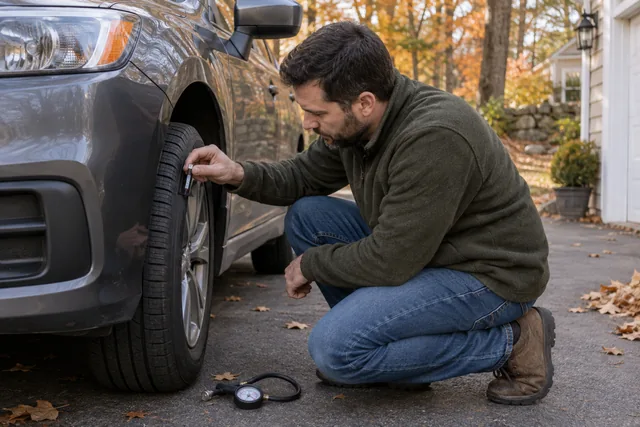
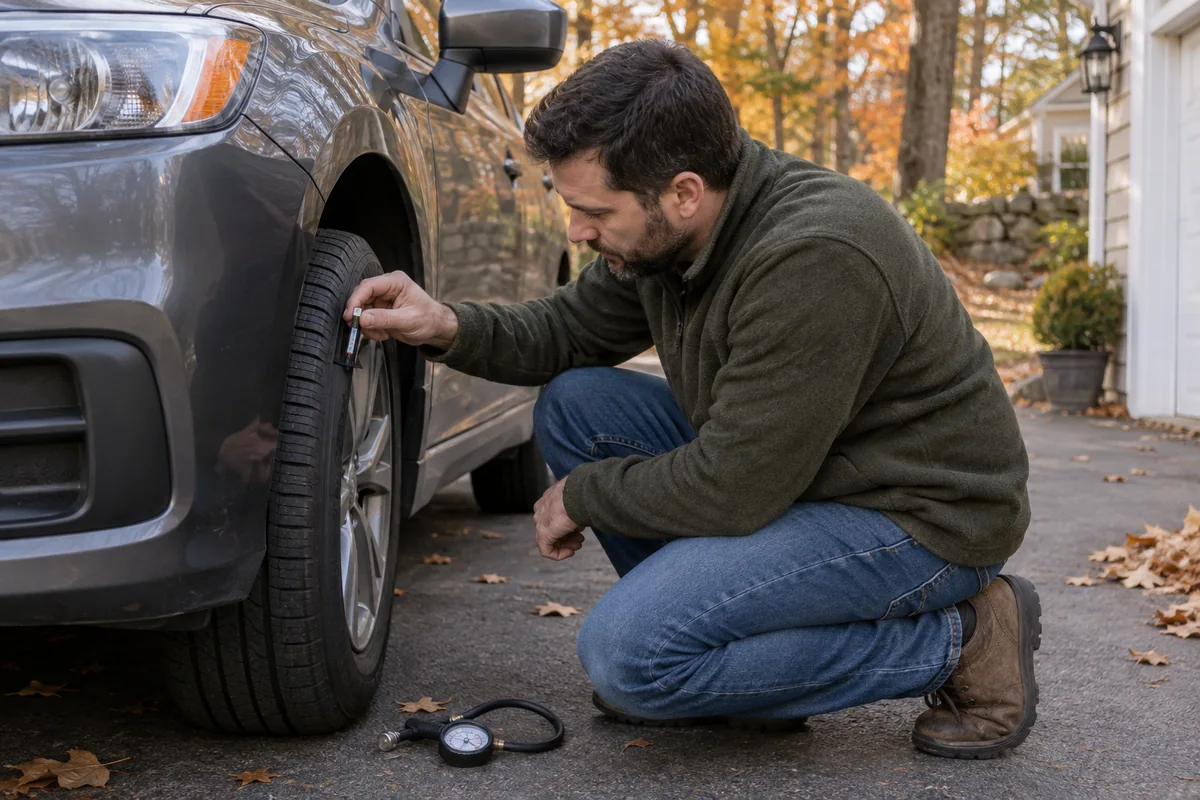
A tire with rapid pressure loss, visible cords, a bulge, sidewall cut, impact damage or severe vibration should not be treated as a routine top-off. Move away from traffic when possible and use roadside help when the tire cannot safely support travel. A TPMS warning means pressure needs checking; a flashing sequence followed by steady illumination may indicate a monitoring-system fault rather than pressure alone.
What a useful inspection should establish
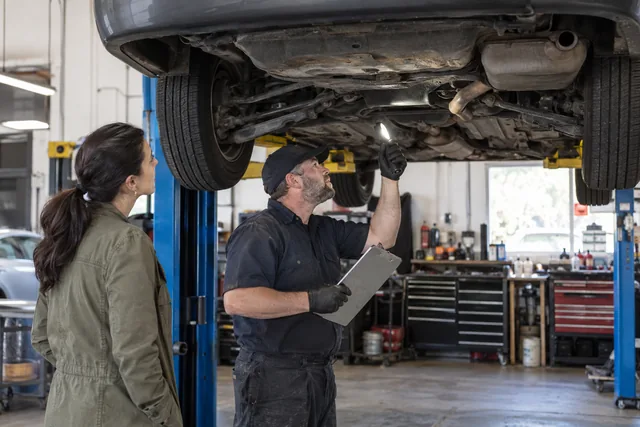
The decision needs the puncture location and angle, remaining tread, internal damage, sidewall condition, age code, wheel condition and the vehicle manufacturer’s size, load and pressure requirements. A plug viewed from outside cannot show all internal damage. Replacement discussions should also address axle or all-wheel-drive matching requirements from the vehicle manufacturer.
How to compare shops
Ask whether the tire will be removed for an internal inspection, what repair method is proposed, whether balancing and valve or sensor service are included, and how replacement size and load capability were selected. Compare the installed total rather than an advertised tire-only price.
Prepare one clear symptom record
Write down when the concern started, whether it is constant or intermittent, the conditions that change it, warning lights, recent work and exact vehicle details.
Build a repair decision checklist →