
First decision: is continued driving reasonable?
Loss of cooling is usually not a roadside emergency, but visibility matters when the system cannot dehumidify the windshield. Burning odor, smoke, belt noise or an electrical fault changes the urgency.
What to record before the symptom disappears
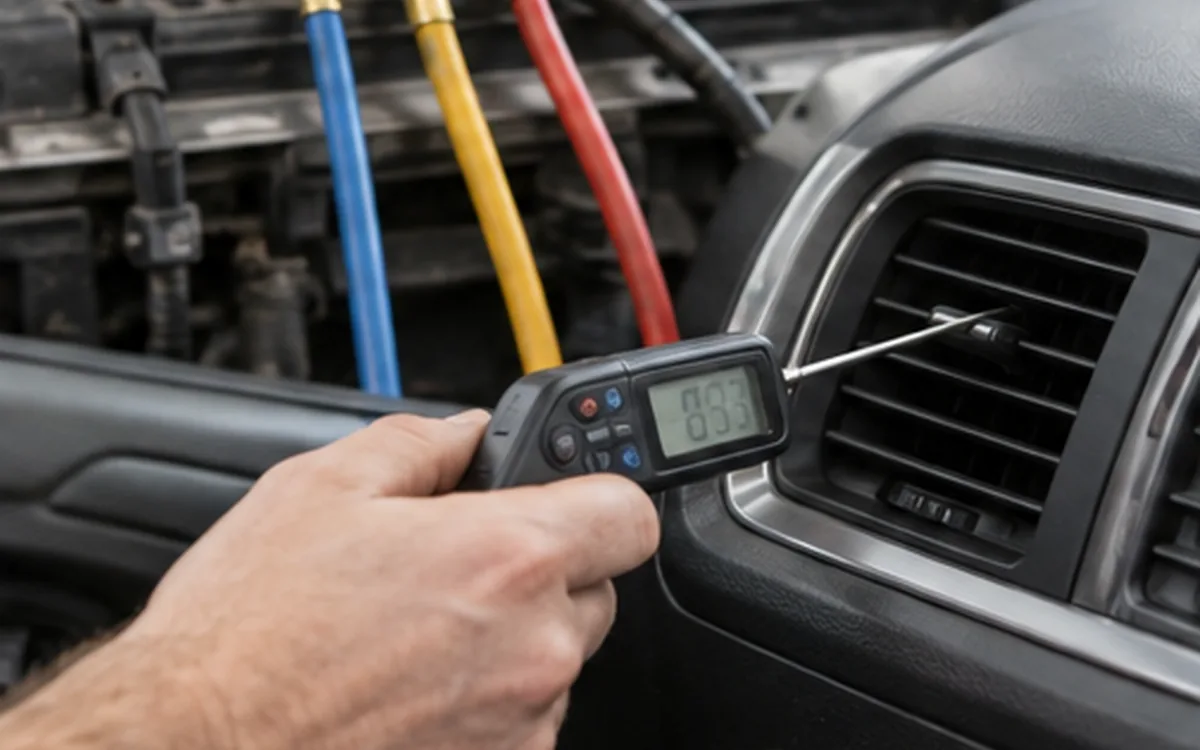
Record ambient temperature, vent temperature, idle versus driving behavior, fan strength, side-to-side differences, noises, odors and whether the compressor or cooling changes intermittently.
What the symptom can—and cannot—establish
Low refrigerant is evidence of a changed charge, not the location of the loss. Airflow doors, blower controls, sensors, electrical commands, pressure behavior and the correct refrigerant type also matter.
Worked situation
Cooling works at highway speed but fades in traffic. Condenser airflow and pressure behavior become important checks; a refill alone does not explain the operating pattern.
How to brief a repair shop
Provide the year, make, model, engine, mileage, exact operating condition, warning behavior, recent work and what changed immediately before the concern. Ask what the initial inspection covers, when further authorization is required, what evidence will support a recommendation and how the original condition will be verified.
Editorial judgment
The safest useful conclusion is usually a level of urgency and a test path—not a part name. A repeated or safety-related symptom deserves evidence from the vehicle and its manufacturer information. If the concern is intermittent, preserving observations and fault data is more valuable than clearing codes or repeatedly attempting to reproduce it in traffic.
Sources and limits
EPA motor vehicle air-conditioning information provides authoritative background. Vehicle-specific instructions in the current owner manual take priority. Source reviewed October 28, 2026.