
First decision: is continued driving reasonable?
Stop using or charging a battery that is swollen, leaking, extremely hot, smoking or producing a strong unusual odor. Follow the vehicle and battery maker’s jump-start instructions.
What to record before the symptom disappears
Record battery age if known, how long the vehicle sat, temperature, accessory use, recent installations, jump-start response and whether a charging warning appeared while driving.
What the symptom can—and cannot—establish
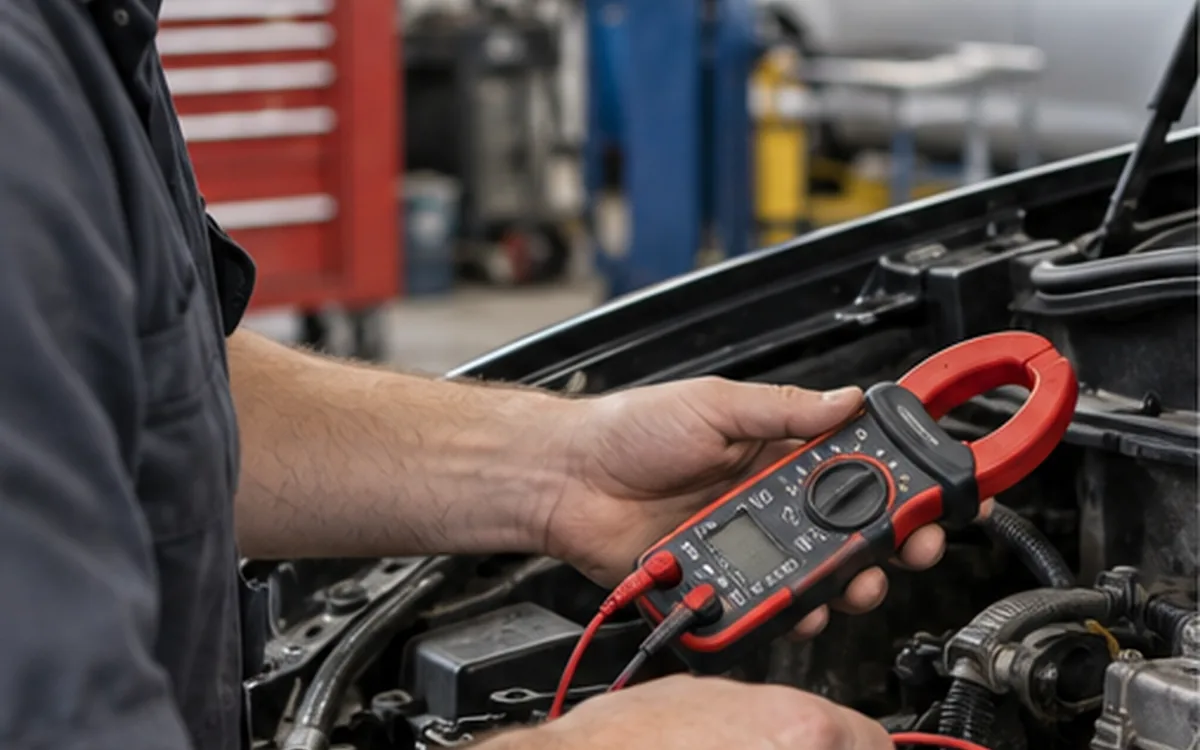
A weak battery, poor connection, charging fault, module staying awake, lamp, accessory or usage pattern can all produce discharge. A parasitic-draw test may require the vehicle to enter its normal sleep state.
Worked situation
A battery tests acceptable immediately after charging but the car is dead after two days. The useful next step is not another battery alone; key-off current and module sleep behavior need investigation.
How to brief a repair shop
Provide the year, make, model, engine, mileage, exact operating condition, warning behavior, recent work and what changed immediately before the concern. Ask what the initial inspection covers, when further authorization is required, what evidence will support a recommendation and how the original condition will be verified.
Editorial judgment
The safest useful conclusion is usually a level of urgency and a test path—not a part name. A repeated or safety-related symptom deserves evidence from the vehicle and its manufacturer information. If the concern is intermittent, preserving observations and fault data is more valuable than clearing codes or repeatedly attempting to reproduce it in traffic.
Sources and limits
NHTSA recall lookup provides authoritative background. Vehicle-specific instructions in the current owner manual take priority. Source reviewed October 28, 2026.