
First decision: is continued driving reasonable?
Pull over and shut down if smoke, flame, fuel odor, electrical failure, overheating or loss of braking or steering is present. Move occupants away and call emergency services for a fire; do not open a hot or burning compartment unnecessarily.
What to record before the symptom disappears
Note whether the odor resembles fuel, oil, rubber, plastic, coolant or overheated brakes; where it enters; when it occurs; recent repairs; and any smoke or warning message.
What the symptom can—and cannot—establish
Fluid on hot exhaust, slipping belts, wiring, brakes, clutch, road debris and overheating can create different odors. The shop needs visual and operational evidence rather than a deodorizing treatment.
Worked situation
A smell appears only after a long downhill drive and one wheel is much hotter. Brake use or drag deserves immediate attention; an engine oil leak would follow a different evidence path.
How to brief a repair shop
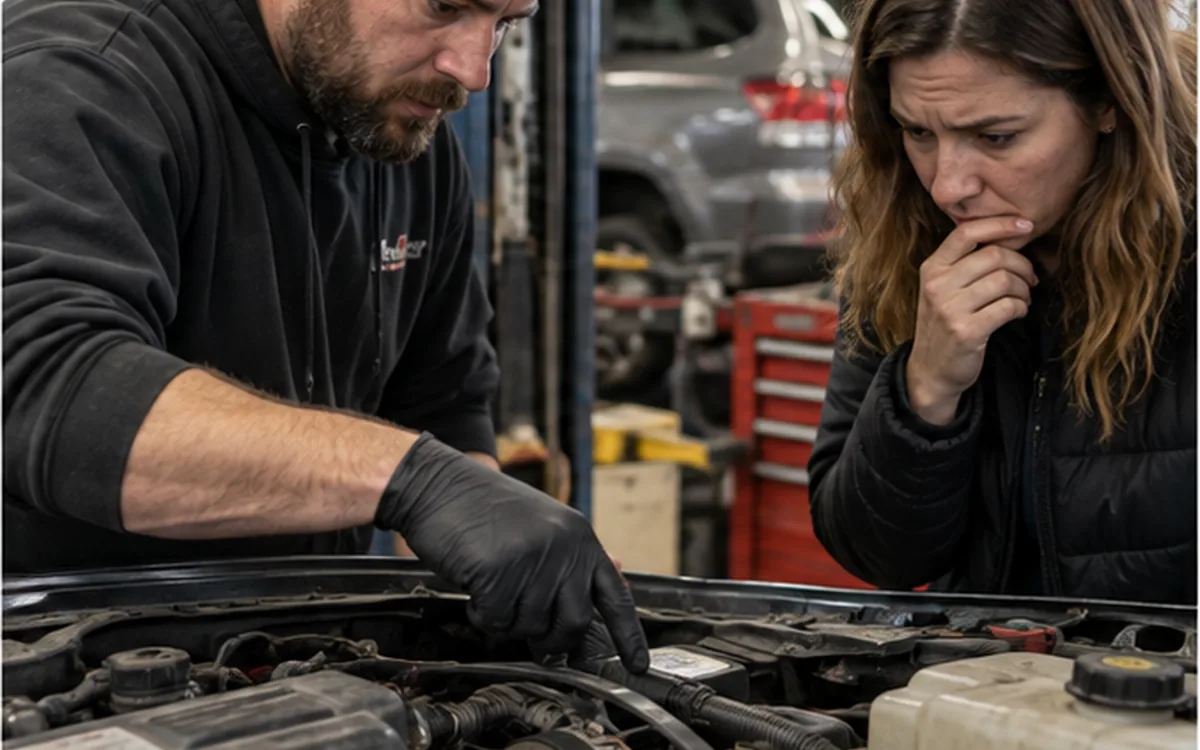
Provide the year, make, model, engine, mileage, exact operating condition, warning behavior, recent work and what changed immediately before the concern. Ask what the initial inspection covers, when further authorization is required, what evidence will support a recommendation and how the original condition will be verified.
Editorial judgment
The safest useful conclusion is usually a level of urgency and a test path—not a part name. A repeated or safety-related symptom deserves evidence from the vehicle and its manufacturer information. If the concern is intermittent, preserving observations and fault data is more valuable than clearing codes or repeatedly attempting to reproduce it in traffic.
Sources and limits
NHTSA fire safety information provides authoritative background. Vehicle-specific instructions in the current owner manual take priority. Source reviewed October 28, 2026.