
First decision: is continued driving reasonable?
Move the vehicle out of traffic only when that can be done safely. Stop repeated attempts if cables become hot, smoke appears, fuel odor is present or the starter sounds mechanically abnormal.
What to record before the symptom disappears
Record whether the engine cranks normally, slowly, clicks, stays silent or starts and immediately stalls. Note dashboard behavior, outside temperature, recent battery work, fuel level and whether another key changes the result.
What the symptom can—and cannot—establish
A battery, terminals, starter circuit, charging problem, immobilizer, fuel delivery, ignition or mechanical condition can create similar symptoms. A jump start only shows that outside electrical assistance changed the situation; it does not identify the failed component.
Worked situation
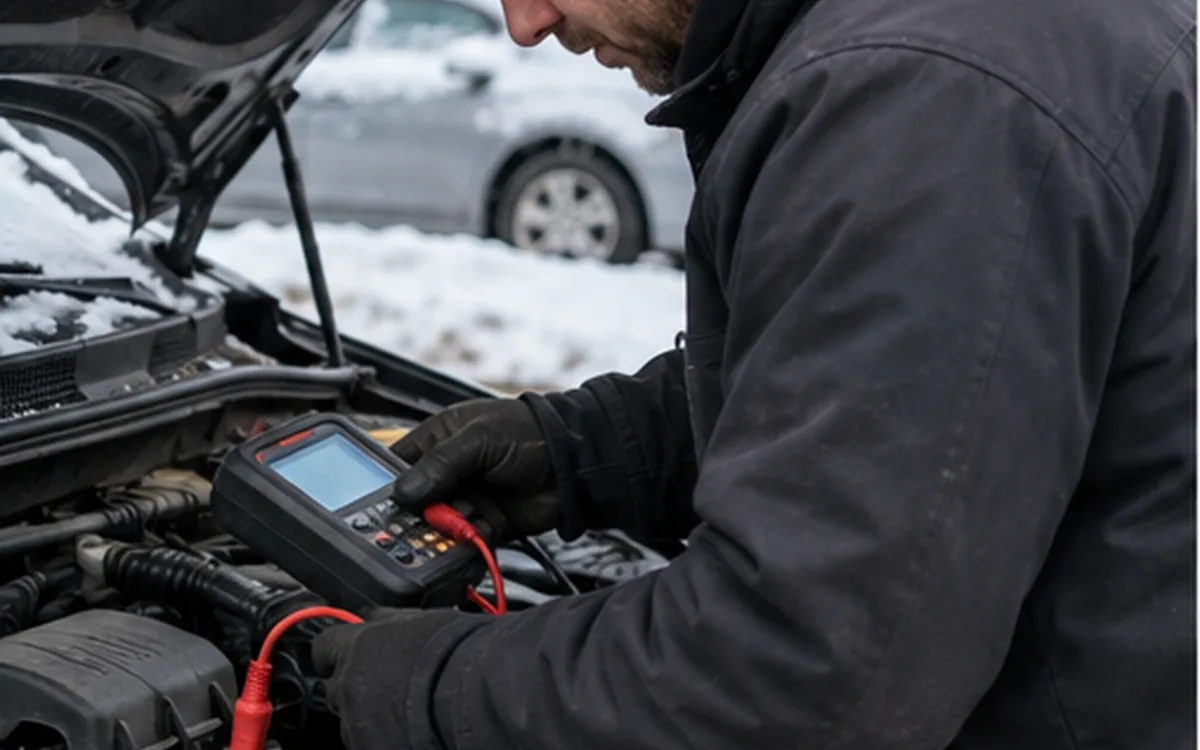
A cold-morning driver hears rapid clicking and the interior lights dim. The useful next step is a battery and connection test under load plus charging-system verification—not automatically purchasing the first battery offered.
How to brief a repair shop
Provide the year, make, model, engine, mileage, exact operating condition, warning behavior, recent work and what changed immediately before the concern. Ask what the initial inspection covers, when further authorization is required, what evidence will support a recommendation and how the original condition will be verified.
Editorial judgment
The safest useful conclusion is usually a level of urgency and a test path—not a part name. A repeated or safety-related symptom deserves evidence from the vehicle and its manufacturer information. If the concern is intermittent, preserving observations and fault data is more valuable than clearing codes or repeatedly attempting to reproduce it in traffic.
Sources and limits
NHTSA recalls and manufacturer owner information provides authoritative background. Vehicle-specific instructions in the current owner manual take priority. Source reviewed October 28, 2026.