
First decision: is continued driving reasonable?
Shut down for severe knocking, low-oil-pressure warning, overheating, smoke, fuel odor, a rapidly worsening sound or visible loose parts. Do not lean into a running engine or approach moving belts and fans.
What to record before the symptom disappears
Record cold or hot operation, engine speed, load, selected gear, AC use, warning lights, oil level procedure, recent work and a short safe recording if it can be made without distraction.
What the symptom can—and cannot—establish
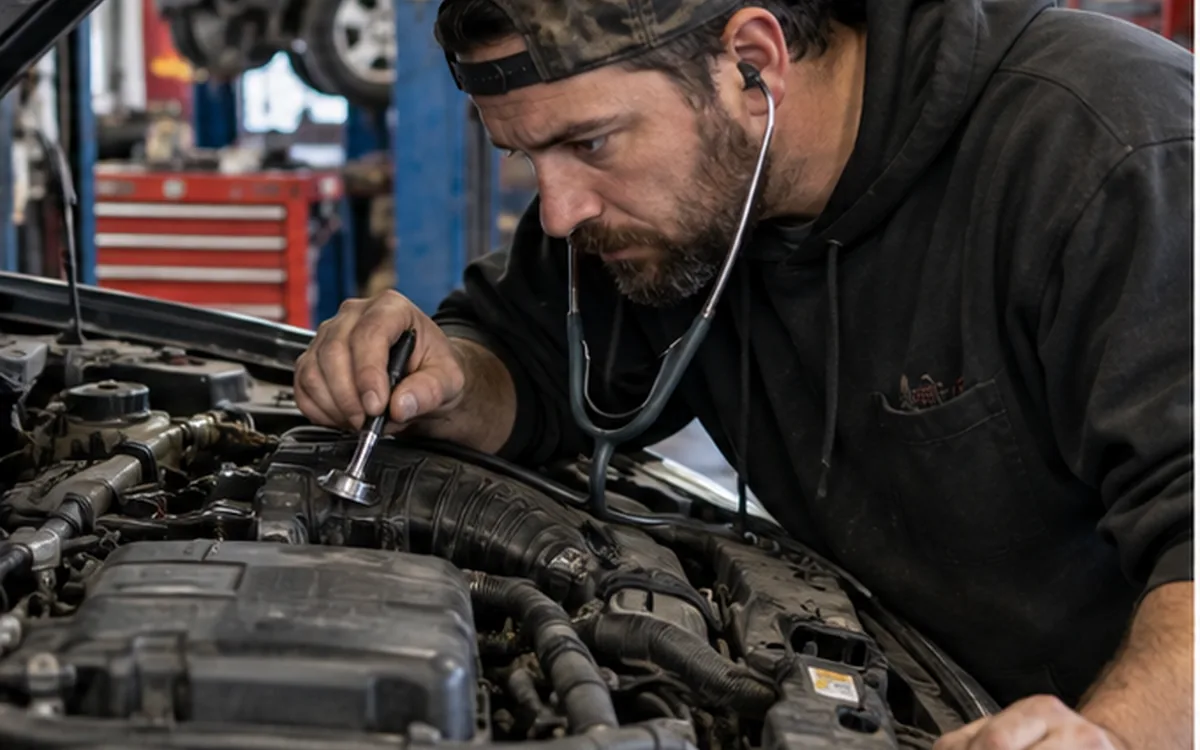
Accessories, belts, exhaust leaks, valvetrain, combustion, internal bearings, mounts and driveline parts can transmit sound. Location tools and controlled tests matter more than an online sound label.
Worked situation
A brief cold-start rattle disappears in two seconds, while a heavy knock grows with load. Both deserve documentation, but they do not justify the same urgency or test plan.
How to brief a repair shop
Provide the year, make, model, engine, mileage, exact operating condition, warning behavior, recent work and what changed immediately before the concern. Ask what the initial inspection covers, when further authorization is required, what evidence will support a recommendation and how the original condition will be verified.
Editorial judgment
The safest useful conclusion is usually a level of urgency and a test path—not a part name. A repeated or safety-related symptom deserves evidence from the vehicle and its manufacturer information. If the concern is intermittent, preserving observations and fault data is more valuable than clearing codes or repeatedly attempting to reproduce it in traffic.
Sources and limits
NHTSA recalls provides authoritative background. Vehicle-specific instructions in the current owner manual take priority. Source reviewed October 28, 2026.