
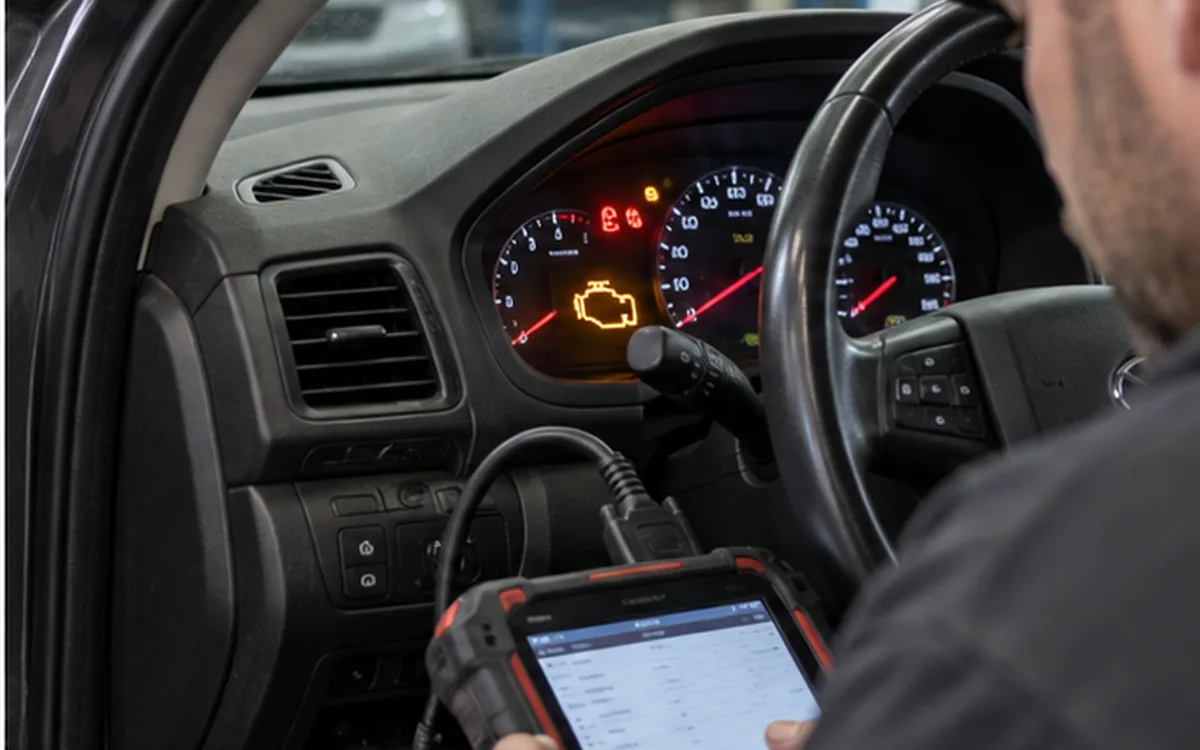
First decision: is continued driving reasonable?
Follow the owner manual. Red oil-pressure, temperature, brake or charging warnings and any flashing light with severe symptoms can require stopping. Do not clear codes or disconnect the battery before evidence is recorded.
What to record before the symptom disappears
Photograph the exact symbol while safely parked, note whether it flashes, when it appeared, other messages, drivability, gauges, recent service and whether it returns after restart.
What the symptom can—and cannot—establish
A warning identifies a monitored condition, not always a failed component. Scanning, measurements, circuit tests and manufacturer procedures may be needed. Some warnings concern safety systems even when the vehicle seems to drive normally.
Worked situation
A steady engine light with normal operation permits a different plan from a flashing light with shaking. The icon is similar, but urgency and the risk of catalyst damage are not.
How to brief a repair shop
Provide the year, make, model, engine, mileage, exact operating condition, warning behavior, recent work and what changed immediately before the concern. Ask what the initial inspection covers, when further authorization is required, what evidence will support a recommendation and how the original condition will be verified.
Editorial judgment
The safest useful conclusion is usually a level of urgency and a test path—not a part name. A repeated or safety-related symptom deserves evidence from the vehicle and its manufacturer information. If the concern is intermittent, preserving observations and fault data is more valuable than clearing codes or repeatedly attempting to reproduce it in traffic.
Sources and limits
NHTSA dashboard warning lights provides authoritative background. Vehicle-specific instructions in the current owner manual take priority. Source reviewed October 28, 2026.